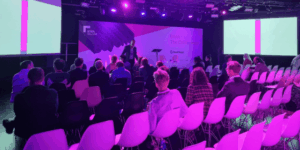




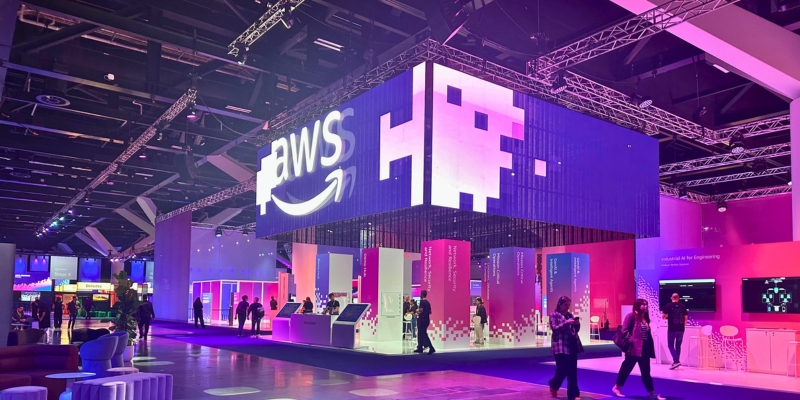


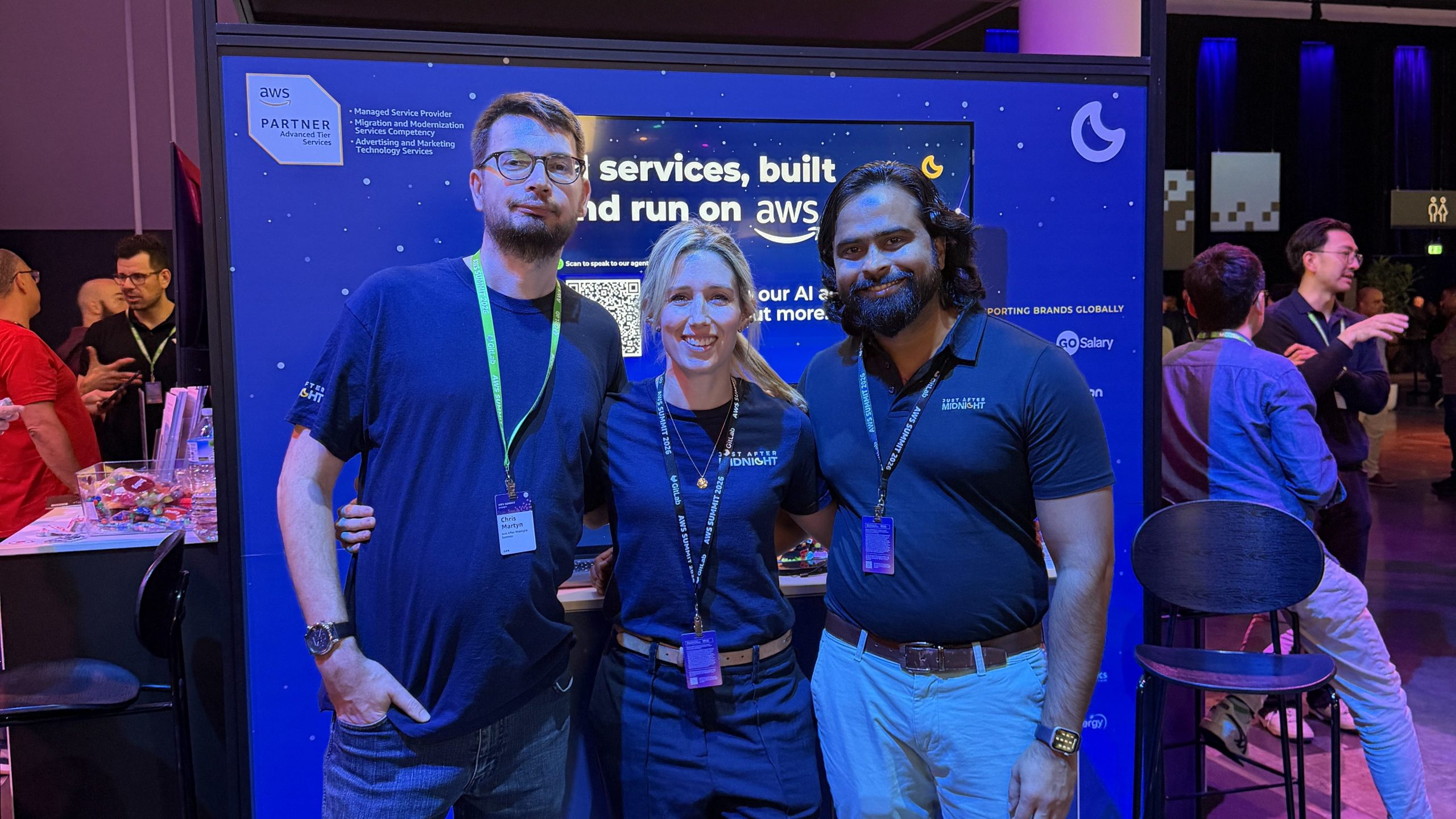
This year Just After Midnight exhibited at three AWS Summits.
London at ExCeL in April, Singapore at the Sands Expo in May and two days in Sydney at the ICC shortly after. Three continents, three cities, three very different energy levels and audiences, but a surprisingly consistent set of signals running through all of them.
Here’s what we observed.
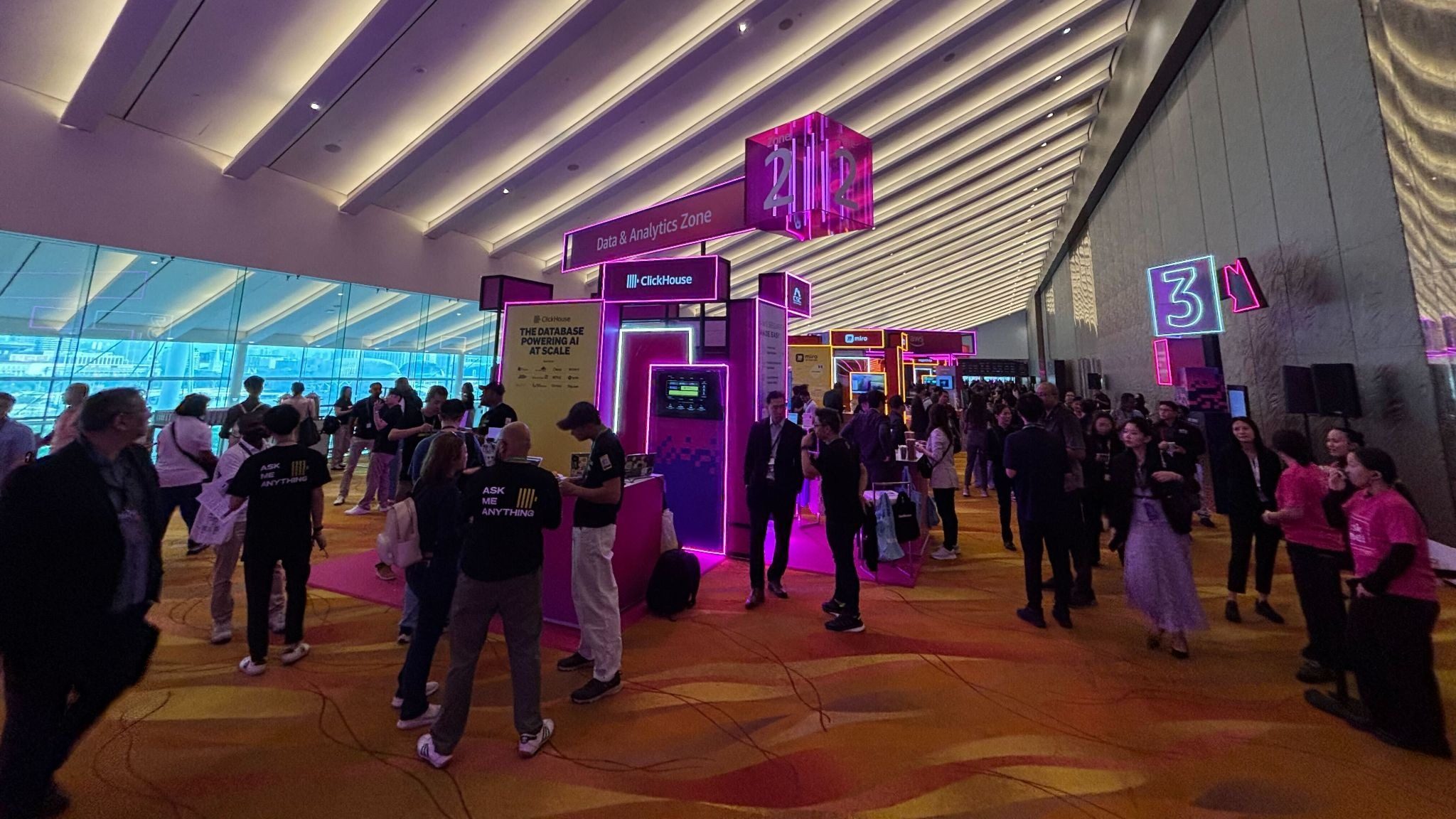
The AWS ecosystem is getting more selective
The Summits themselves have grown. London alone ran over 200 sessions spanning data, agentic AI, security and digital transformation. Sydney drew thousands across two packed days.
The scale is impressive, but what struck me more than the size was the shift in tone around the partner ecosystem.
Across all three events, AWS was unambiguous in its messaging to partners: specialisation is the direction of travel. The days of broad, generalist positioning are numbered.
AWS Competency validates partners who leverage AWS technology to solve complex, industry and use-case specific challenges. And this isn’t just a badging exercise. To achieve specialisations, organisations must undergo rigorous technical validation and assessment of their AWS solutions and practices.
For any AWS partner attending these events, the message wasn’t subtle. Know your lane, demonstrate your credentials and earn the right to be trusted with business-critical workloads. Competency attainment isn’t just about unlocking go-to-market benefits: it’s increasingly how enterprise buyers are filtering their shortlists before conversations even begin.
AWS Marketplace featured alongside this as a clear strategic priority. The message to partners being that it’s no longer just a procurement channel, but increasingly how enterprise buyers choose to discover and transact. For partners not yet investing in their Marketplace presence, the window is narrowing.
AI was everywhere
You guessed it.
AI dominated the keynotes, the expo floors and nearly every breakout session at all three Summits.
In APAC specifically, the numbers being cited are significant: $370 billion in AI and generative AI spending projected by 2029, with half of all new economic value expected to come from businesses investing in AI capabilities today. And you couldn’t walk through the ExCeL in London without encountering a demo, a session or a stand built around it either.
We’re not entirely innocent there. Just After Midnight also demoed something AI-powered we built on AWS. More on that very soon.
To no surprise, the agentic AI thread ran particularly strongly across all three content programmes. I saw countless technical sessions offered in Sydney around building agents, while Singapore went deeper with sessions dedicated to solving agentic AI’s toughest production challenges. We also managed to see a fantastic session in Singapore from one of our clients, Grab, on building the foundations for AI at scale. What became clear across all three programmes is that the conversation has moved on from whether to build to how to make agentic systems work reliably.
At the AWS Partner Summit I attended in Sydney, Theo Hourmouzis, GM ANZ at Anthropic took to the stage and made a pointed case for Claude on AWS. He framed it not as another model in the mix, but as purpose-built for enterprise, with agentic capabilities, safety credentials and deep AWS integration at its core. It was a more precise pitch than much of what surrounded it, and it landed accordingly with the room.
But the conversations I found most valuable were the ones on the stand and in the margins, particularly with CISOs. And those conversations told a different story. Across London, Sydney and Singapore, the same theme emerged unprompted: organisations are moving fast on AI adoption, but the governance infrastructure to support that adoption simply doesn’t exist yet. Not in any practical, operational sense. Businesses are adapting as they go, with no established framework, no standard playbook and limited accountability structures in place. Every CISO I spoke to said essentially the same thing. That level of consistency, across geographies and industries, is worth paying attention to. It’s a gap, and it’s a significant one.
The support question
One theme surfaced repeatedly, especially in London and Sydney, and it was more operational than strategic: 24/7 support for business-critical platforms.
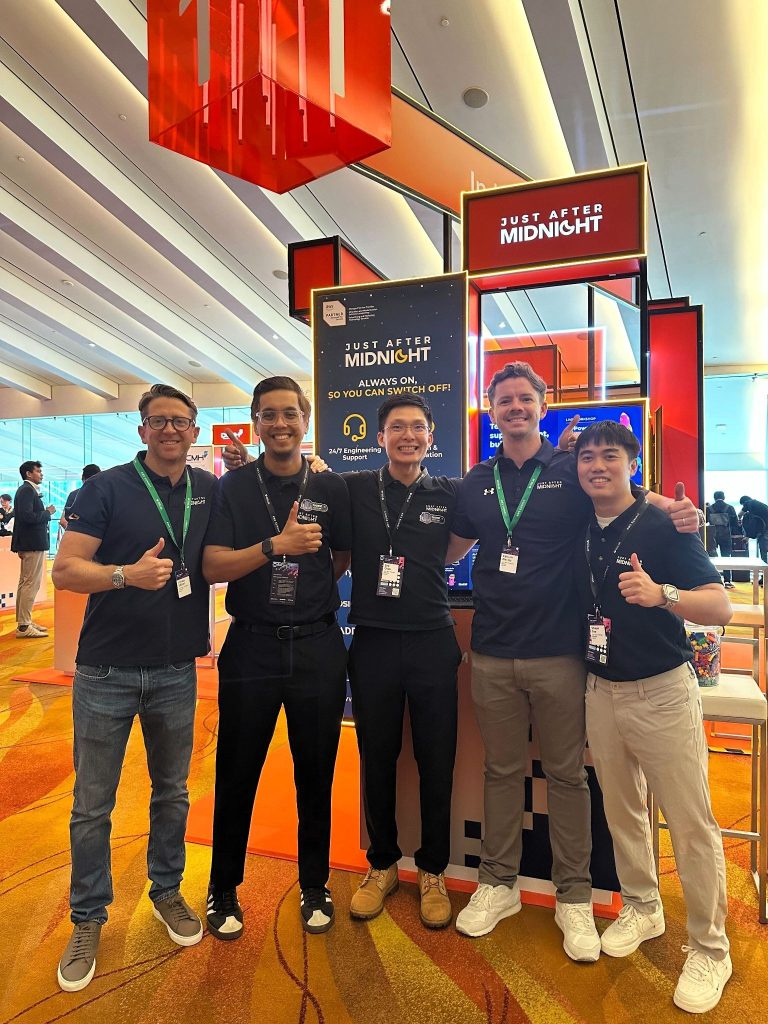
It sounds like table stakes. In practice, it isn’t. Genuine round-the-clock coverage (not an on-call rota or a follow-the-sun model that wobbles at the edges) is something very few providers can credibly deliver. It’s the reason Just After Midnight exists. Customer after customer in London and Sydney raised it, either because they’d been let down before or because they were actively evaluating providers and couldn’t find it in the market. A few AWS reps I spoke to on the floor were making the same observation.
In Singapore the conversation was slightly different, but pointed in the same direction. Round-the-clock coverage is more of a baseline and expected as part of any credible managed service offering, especially for customers operating in regulated industries. The gap between what’s required and what the market can genuinely deliver is, if anything, more pronounced there than anywhere else we visited.
The fact that this remains a differentiator in 2026 says something honest about the market. It shouldn’t be rare. It is.
What we’re taking forward
Three Summits in quick succession gives you a useful composite picture. What’s genuinely shifting versus what’s being amplified by the event circuit.
What’s genuinely shifting:
- The AWS partner ecosystem is consolidating around specialist capability
- AI governance is becoming an urgent unsolved problem
- Enterprise buyers are getting sharper about what they actually need from their cloud partners versus what they’re being sold
The organisations and partners who pay attention to those signals (rather than the noise around them) are the ones likely to be better positioned when the market settles into its next phase.
And on the managed services side, genuine always-on support remains rarer than it should be and more valued than ever.
We came to these summits to talk to the AWS community. We did. If we didn’t get to you across London, Singapore or Sydney, we’re easy to find.